From the working product
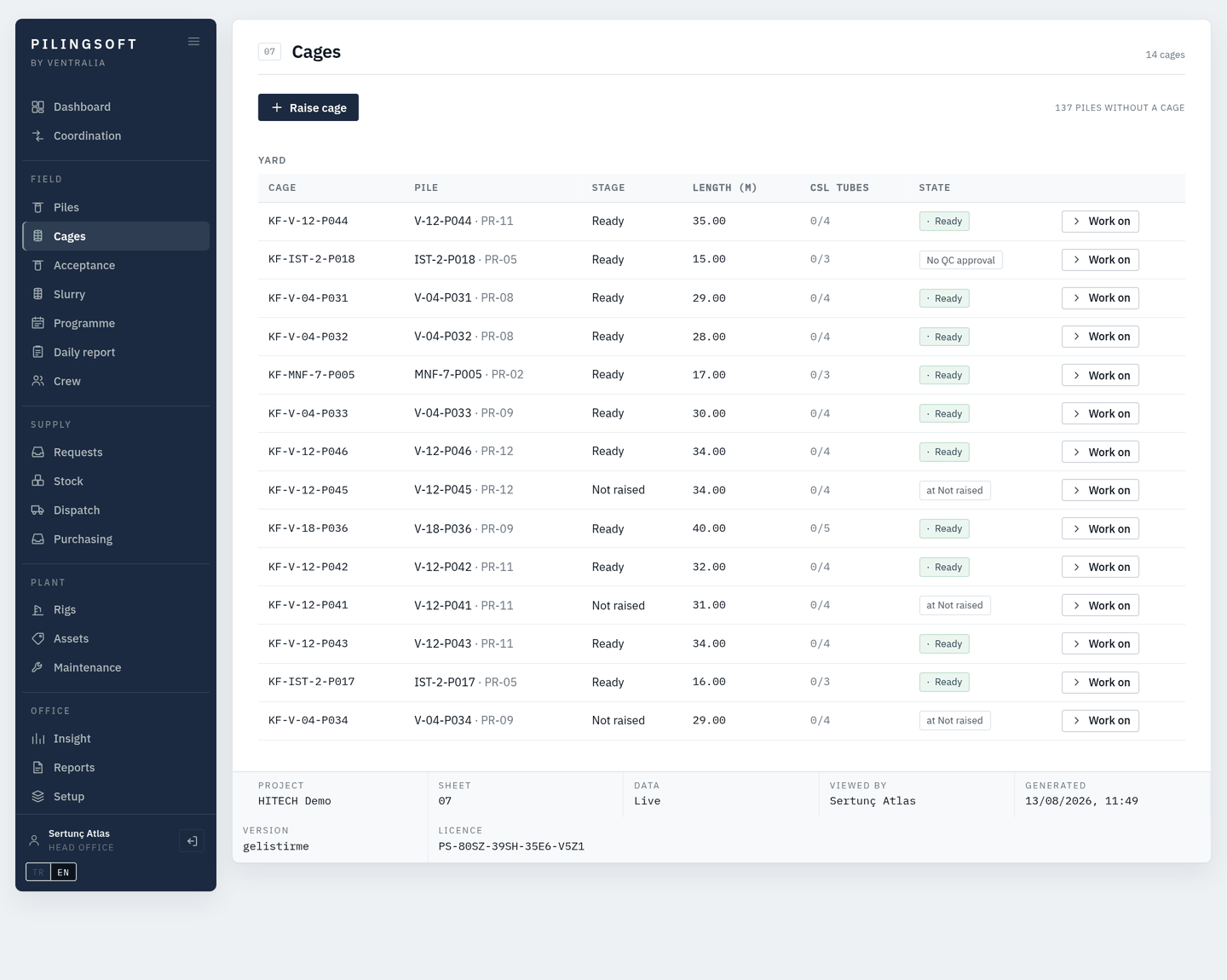
Cage workshop — stage strip, tube count and the bar schedule.
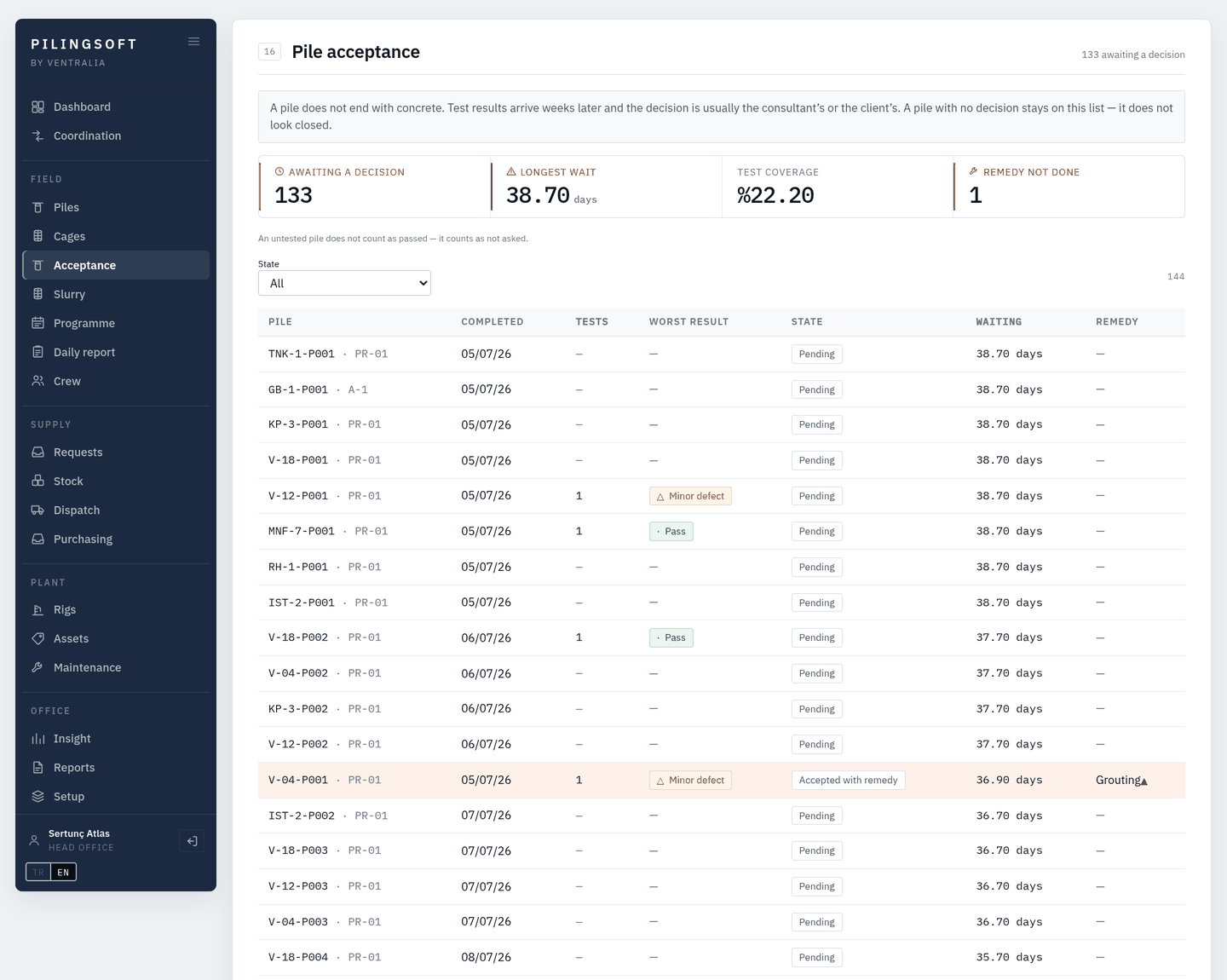
Acceptance — the tests, the decision and its reason on one page.
Depth, concrete, support fluid, cage, test result and the acceptance decision — entered on the rig, not reconstructed in the office three weeks later from a stack of paper.
The pile is planned against the project grid: reference, coordinates, design depth and diameter. Everything after this hangs on that identity.
Start, end, actual depth, tools used and the delay reasons — written while the rig is standing, because "why did it stop" is a question nobody can answer accurately a week later.
Which cage went into which pile, how many CSL tubes it carries and whether QC signed it off. The cage is a record of its own, not a line in a note.
The call, the delivery tickets and the volume placed. Theoretical volume and the sum of the tickets sit side by side, so overbreak is a figure rather than an argument.
CSL, PIT, core or static test results, and then a decision with a reason attached. A rejection without a reason is not a decision, it is an opinion.
Nothing is overwritten. A corrected depth does not erase the first figure — who corrected it, when and why is still readable.
The decision is stamped when it is made and the tests behind it are already in the record. A decision cannot quietly acquire evidence afterwards.
The record is written on the device and syncs when the connection returns. Waiting for a bar of signal is how paper wins.
One ledger, four faces. A record written in one module is read by the next without being typed again.
Half an hour is enough: we enter one pile from your own project together, with your own figures.