From the working product
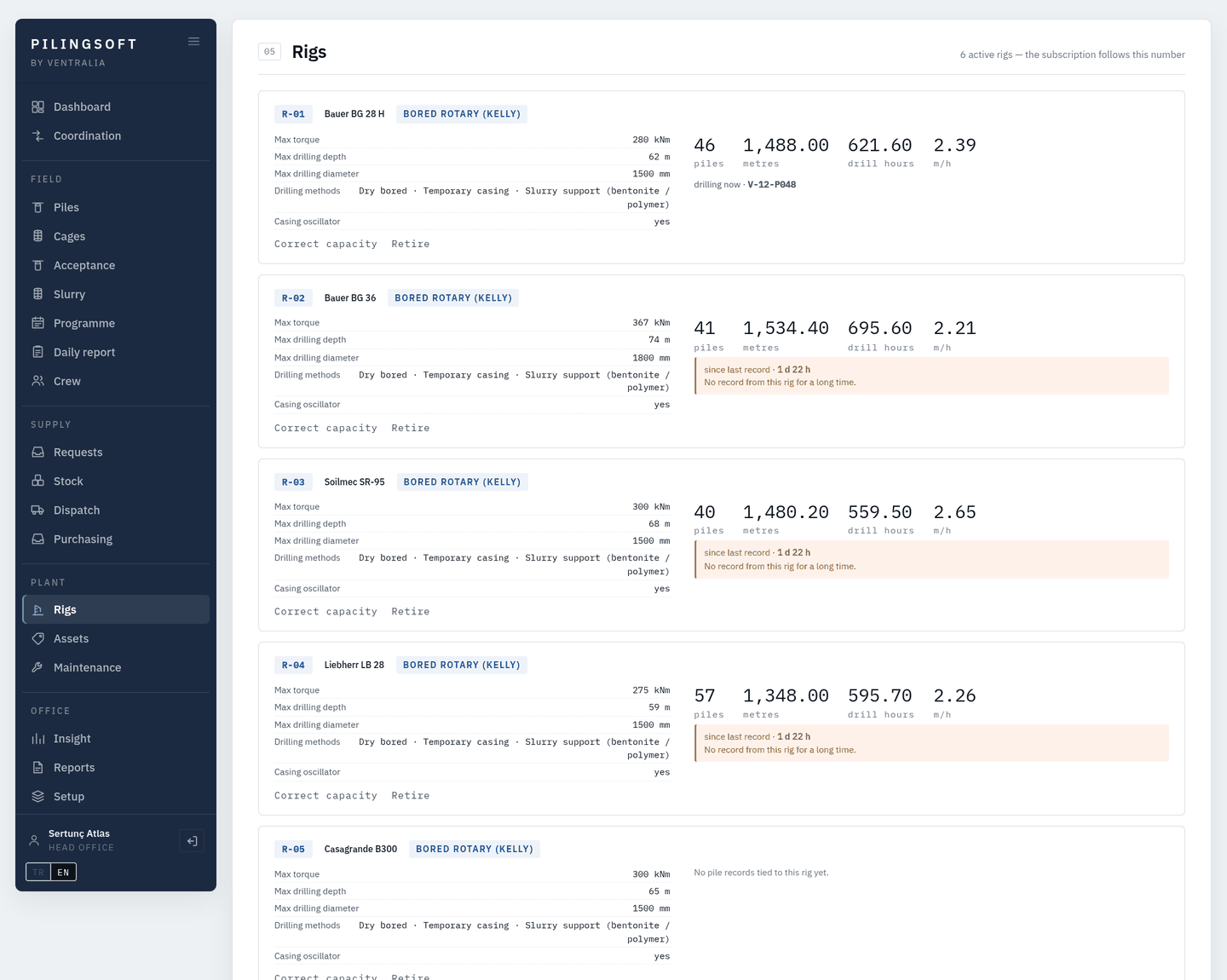
Rigs — where each machine is, and whose it is.
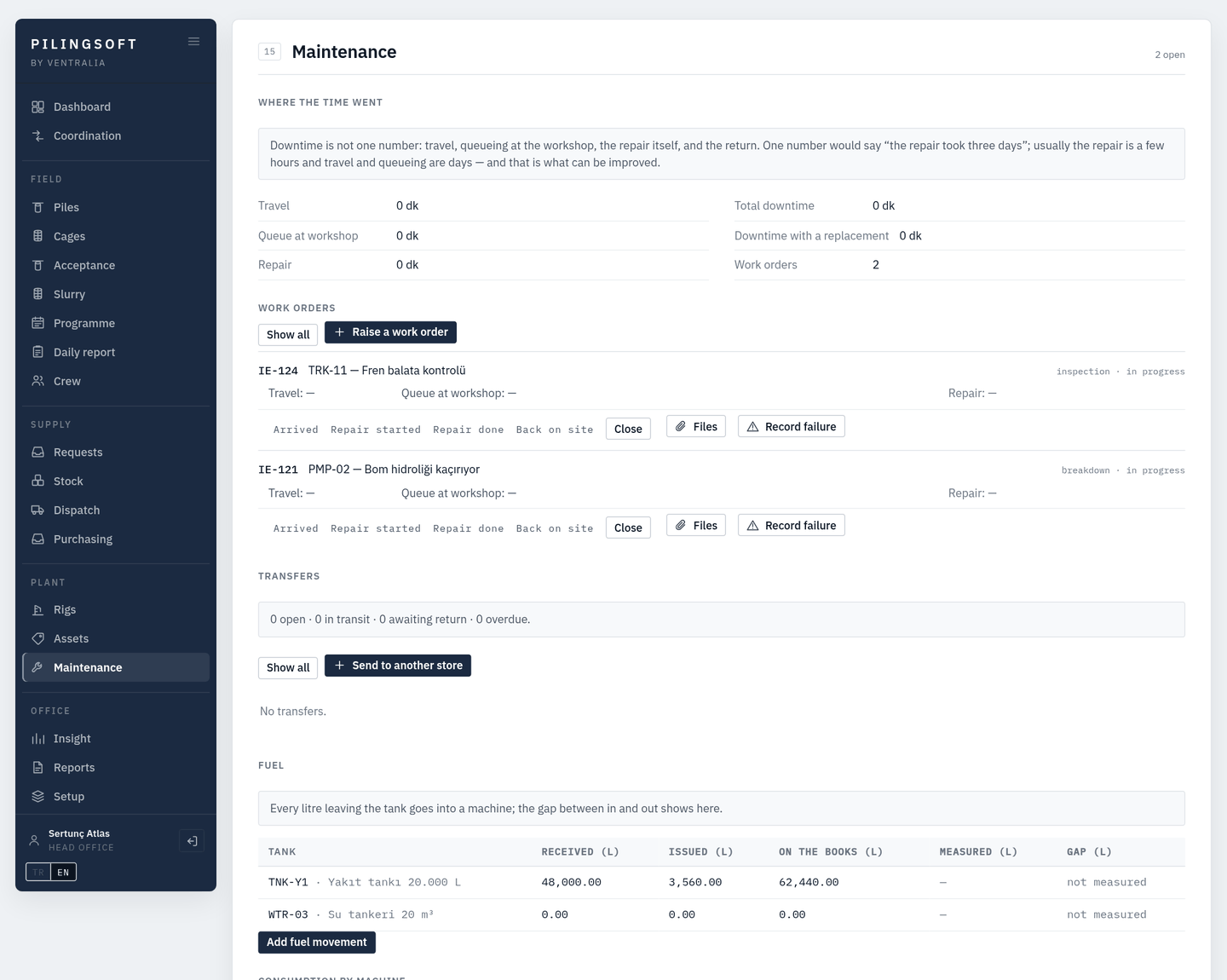
Maintenance — work orders, downtime and component life.
A rig that did not turn is a cost whether or not anyone wrote it down. This module writes it down: on the road, waiting for a part, or under repair.
Rigs, cranes, pumps and the tools they carry, each with its own identity. A fleet you cannot name is a fleet you cannot invoice against.
Which machine is on which site, and when it moved. Subcontractor plant is marked as such — it is on your site but it is not your asset.
Hour meters and fuel drawn per machine. Litres per metre drilled is the number that tells you a rig is sick before it stops.
Raised when something fails, closed when it runs. The clock between the two is the downtime, and it is not typed by hand.
Which part failed, after how many hours, and what replaced it. The second failure of the same part is a pattern, not bad luck.
The clock starts when the work order is raised and stops when it is closed. Nobody has to remember Tuesday afternoon.
It is on the site and it must be visible, but it is not on your asset register and not in your fee. Mixing them makes both numbers wrong.
Metres drilled and the ground type are recorded together, so a tool that dies early in rock is not read as a bad tool.
One ledger, four faces. A record written in one module is read by the next without being typed again.
Half an hour is enough: we enter one pile from your own project together, with your own figures.